
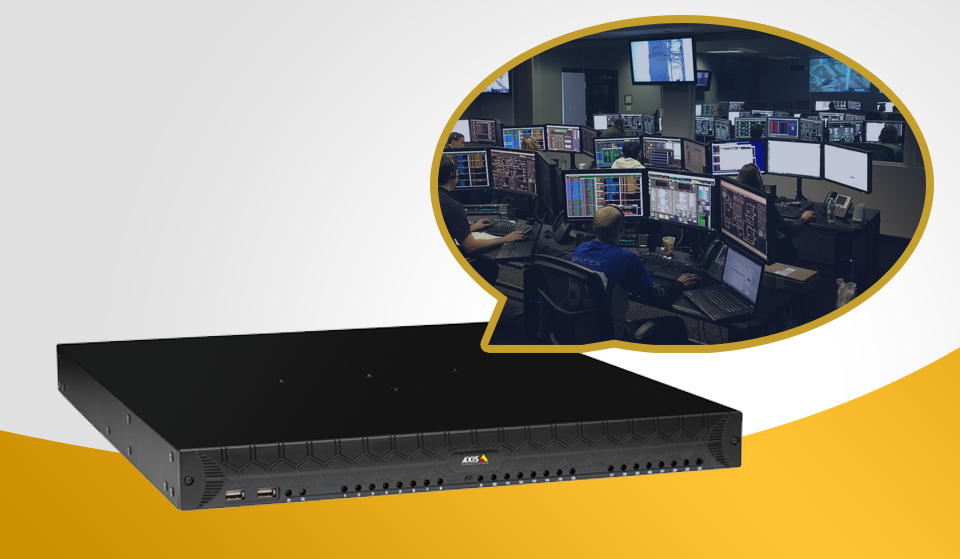
For medium to large-scale CCTV projects, certain components are essential to support surveillance, data structure, and reliable access to captured data.
That’s why, in many cases, technicians dedicate specific hardware to centralize all captured information. This hardware can be a computer often connected to a switch or a dedicated device for storing and managing these data.
DVR, NVR, and HVR
The devices used for the functions mentioned above, without requiring additional hardware or operating systems, are DVRs, NVRs, and HVRs, and we’ll explain the differences between each:
The DVR (Digital Video Recorder) is the most widely known recording system in the CCTV market. In addition to its cost-effectiveness, it integrates analog cameras, making it very common for low-cost small projects.
The NVR (Network Video Recorder) has specifications similar to the DVR, with the difference that it integrates IP cameras, which can be managed over the internet. Additionally, it allows for recording in higher resolutions, typically HD and Full HD.
The HVR (Hybrid Video Recorder) is a hybrid between the previous models, ideal for projects that include both traditional analog cameras and IP cameras.


