
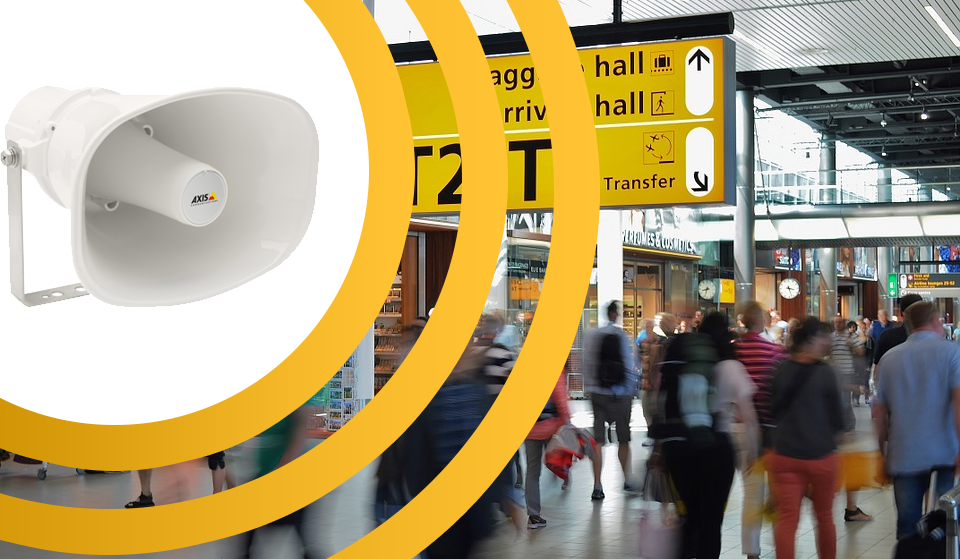
Adding audio to IP surveillance projects can bring numerous advantages for security and event control. In this article, we’ll detail the transmission methods that IP-based CCTV devices typically use for audio capture and reception.
Audio mechanisms can be implemented in various ways, such as unidirectional audio capture through cameras with microphones that integrate audio with video, or ambient sound through IP network-integrated speakers or horns, enabling rapid information transmission from a command center.
Additionally, bidirectional interaction mechanisms can be implemented, allowing audio capture and playback between two locations.
Simplex, Half-Duplex, and Full-Duplex
The two audio environment installation methods mentioned above are related to the terms Simplex, Half-Duplex, and Full-Duplex.
Simplex
Simplex refers to the unidirectional transmission previously mentioned in this article. However, it’s important to note that this mechanism operates on a single transmission line, preventing role reversal. In surveillance projects, this mechanism can be integrated with a camera equipped with a microphone, an access controller, or any audio capture device and paired with a voice analysis algorithm to trigger events.
Half-Duplex
Half-duplex transmission involves a transmitter and a receiver, allowing bidirectional communication, but not simultaneously. It functions similarly to a walkie-talkie, making it useful when an operator needs to interact with a group of people on-site.
Full-Duplex
Full-duplex is the most advanced bidirectional communication mechanism, enabling simultaneous communication between locations. Although this type of transmission is dynamic, strategic placement of speakers and microphone-equipped devices during project development is necessary to avoid issues like audio feedback.


