
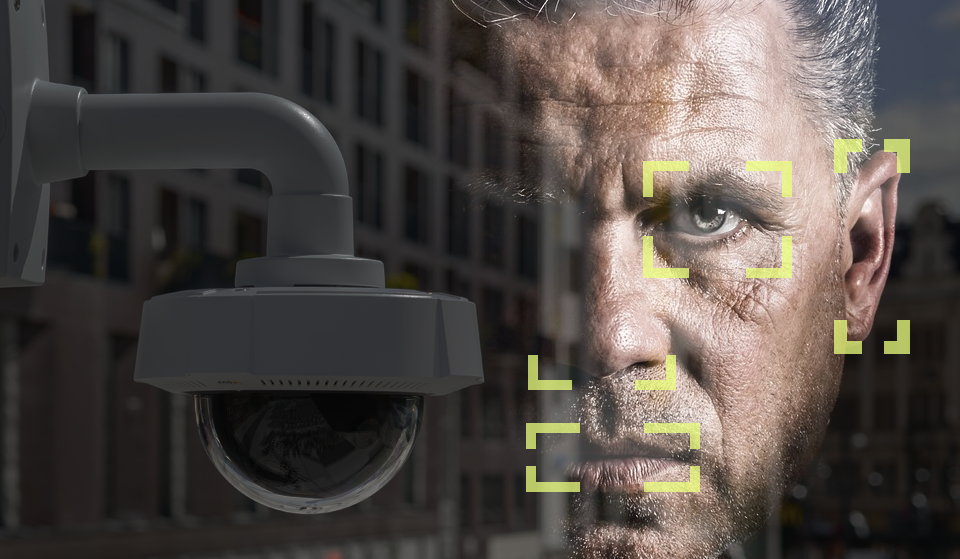
The facial recognition technology integrated with government projects is already being implemented in some countries around the world, such as China. This type of technology, integrated with CCTV networks, assists authorities in making quick and effective decisions, spreading across various countries as one of the main resources of smart policing.
In Brazil, this type of resource is being gradually implemented in pilot projects in small towns or smaller areas of large capitals.
How does it work?
For a facial recognition system to function correctly, at least three requirements are necessary: a camera with viable recognition settings, video monitoring software compatible with facial analysis, and a network that can handle the transmission and storage of data.
HD (1080p) resolution cameras are generally the most recommended for this segment, as their image capture capabilities are advanced and consequently more reliable; however, for this to occur, the face must be at a close distance to the camera.
Facial recognition is specified by the number of pixels that a camera can support. Axis, which has been working with network camera solutions for many years, suggests that in ideal situations, facial recognition should be performed by cameras with at least 6 pixels/cm.
In cases of greater distances, it is necessary to use cameras with advanced configurations such as PTZ (pan-tilt-zoom) and in higher resolutions like FullHD and 4K.
Software and network
The software and data transmission configuration via IP network can vary depending on the project. Generally, for quick and strategic decision-making, the management of large cities seeks real-time video monitoring solutions and consequently software that can perform facial recognition and generate alerts quickly.
This type of configuration can overload the internal network; to avoid this type of problem, a good technical understanding of network traffic and the possible fluctuations due to internal or external events of the project is necessary.
For this reason, various CCTV projects are initiated in pilot mode and in small areas, as it allows management to have greater control over problematic events that were not anticipated at the beginning of the project.
Which cities?
The main city where this type of project was implemented is Rio de Janeiro, through an experimental project in partnership with the Military Police. According to G1, during the last carnival, 28 cameras were installed throughout the Copacabana neighborhood.
Additionally, other cities in Brazil, such as Caraguatatuba, Atibaia, and Guararema in the state of São Paulo, are developing their respective facial recognition projects.
References:
- https://g1.globo.com/rj/rio-de-janeiro/noticia/2019/03/01/cameras-com-reconhecimento-facial-sao-instaladas-em-copacabana-durante-o-carnaval.ghtml
- https://www.novaimprensa.com/2019/03/caragua-implanta-tecnologia-de-reconhecimento-facial-nas-ruas.html


