
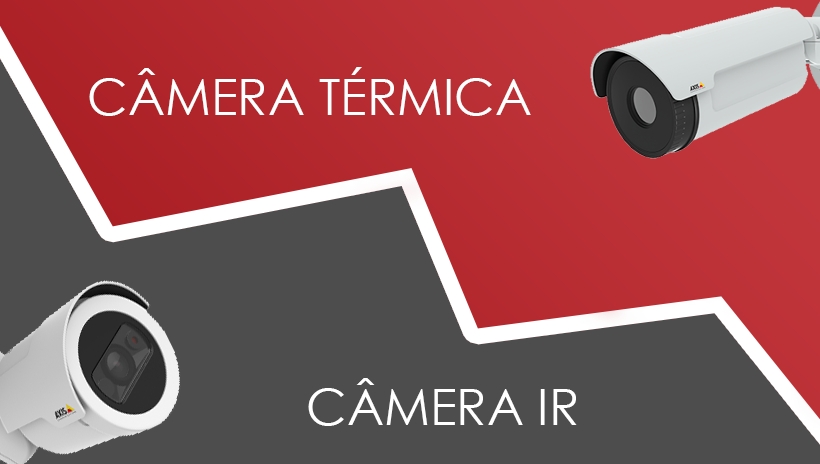
Understanding the differences between thermal cameras and cameras with infrared technology is essential for setting up your project, as both can be used to capture images in low or no light environments, but for different purposes.
Thermal Cameras:
As we saw in the following article, thermal cameras have a sensor that allows monitoring of environments, living beings, and objects through the radiation emitted by them in the form of temperature. It is important to remember that they are used for detection, excluding the possibility of identification, and are invalid in legal cases.
It is worth noting that it is necessary to obtain a Certificate of Registration (CR) to acquire some thermal cameras, as some can "see" through objects, posing risks to the integrity and privacy of people and properties.
Infrared Cameras:
IR cameras with infrared sensors can be used for monitoring day and night, as explained in this article, since during the day image capture is done in color and at night the infrared is activated and capture is performed in shades of gray.
In addition to the use of LED, we have the OptimizedIR technology developed by Axis Communications that emerged to optimize the monitoring of cameras with advanced technology, allowing for the detection and identification of people and objects in cases where lighting is not favorable.
Which one should I buy?
It is necessary to analyze the purpose of the monitoring; if you want to capture movements in a perimeter, thermal cameras are good options, but if in addition to detecting you also want to identify, cameras with infrared sensors are great bets.
Now you can get a quick quote from us!


